🔹 In-depth Scientific Profile
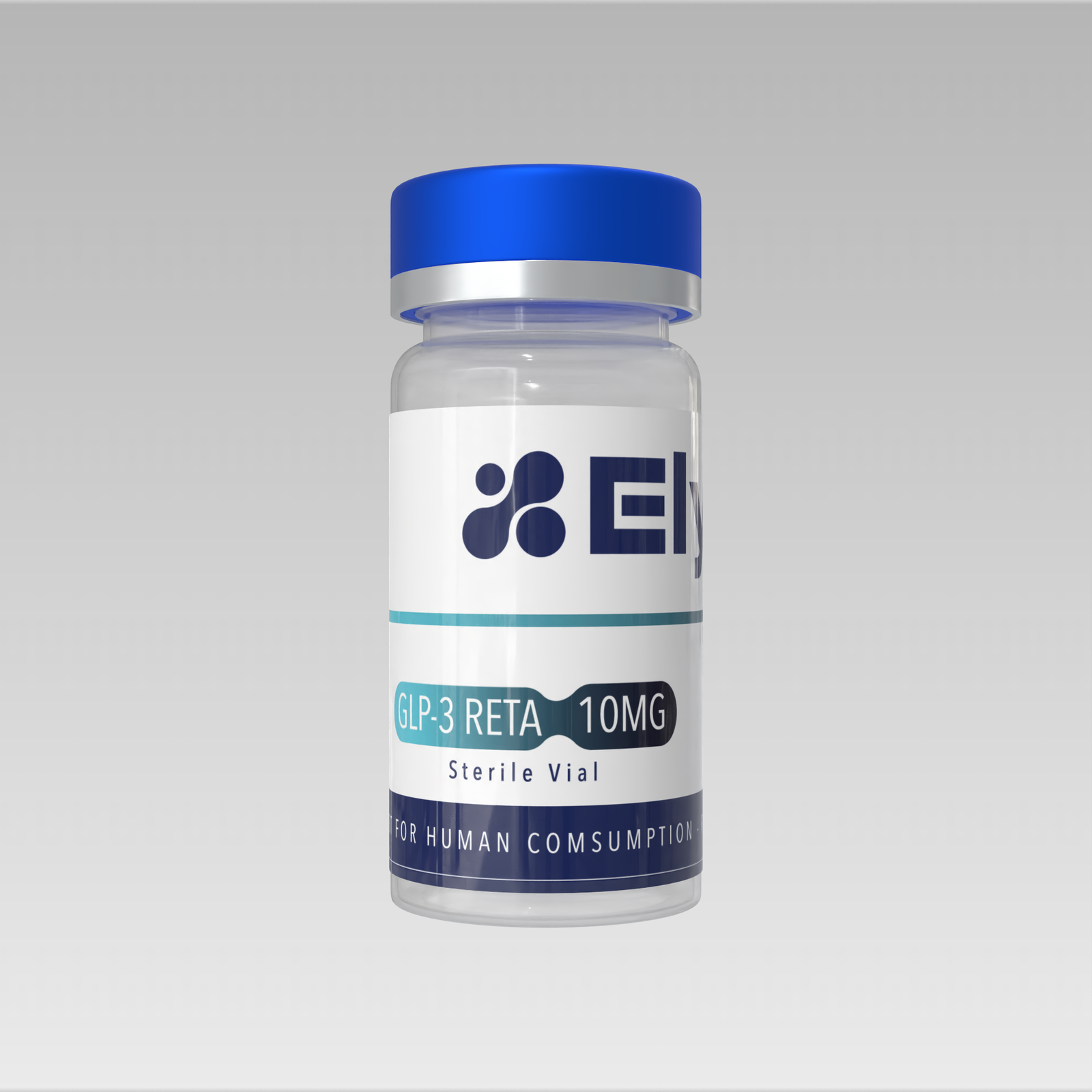
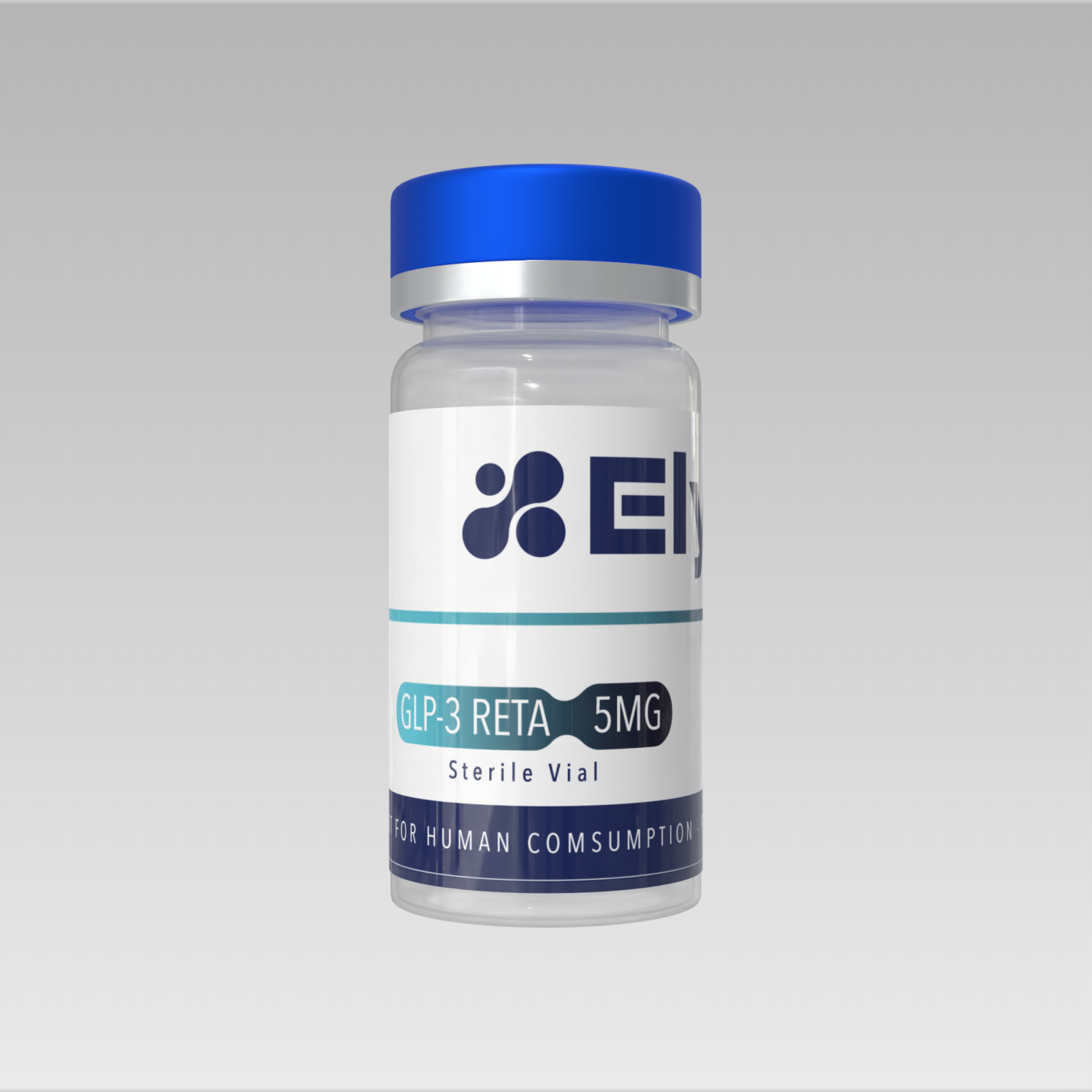
Retatrutide (LY3437943) represents the frontier of metabolic pharmacology as the first triple agonist combining synchronized activation of GIP, GLP-1, and glucagon receptors. This acylated synthetic peptide (MW: ~5960 Da) incorporates:
Innovative Molecular Design:
- Base structure: optimized sequence of human glucagon peptide
- Strategic modifications for balanced tri-agonist activity
- C18-C20 acyl chain at a specific lysine residue (albumin binding >98%)
- Hydrophilic spacer for serum stability
- Resistance to DPP-4 and neprilysin degradation
Triple Synergistic Mechanism of Action:
- GIP-R Activation (Glucose-dependent insulinotropic polypeptide):
- Potentiation of glucose-dependent insulin secretion
- Lipid Metabolism Modulation in White Adipocytes
- Anti-inflammatory effect in adipose tissue
- Neuroprotection in the CNS
- GLP-1R Activation (Glucagon-Like Peptide-1):
- Insulin secretion + glucagon suppression
- Delayed gastric emptying (reduction 75%)
- Appetite suppression via hypothalamic nuclei
- Preservation of pancreatic beta cells
- Glucagon Receptor Activation (GCGR):
- Paradoxical effect Increase in energy consumption 15-20%
- Hepatic lipolysis: visceral/ectopic fat mobilization
- Thermogenesis in brown adipose tissue (BAT)
- Prevention of hepatic steatosis (↑ beta-oxidation)
Unique Pharmacokinetics
- SC Bioavailability: 75–82%
- Max T: 24-48 hours
- Average lifespan: 6-7 days (168 hours)
- Steady state: 5-6 weeks
- Elimination: enzymatic degradation + renal clearance <2%
🔹 Applications, Mechanisms, and Extended Research
Weight Loss Data in Comparative Research
Phase 2 Studies (Dose Escalation):
- Body weight reduction: up to 24.2% at a dose of 12 mg (48 weeks) (Jastreboff et al., 2023)
- Comparison: 15% semaglutide 2.4 mg, 20% tirzepatide 15 mg
- Weight loss ≥20%: 75% participants (maximum dose)
- Weight loss ≥25%: 45% participants
Revolutionary Body Recomposition:
- Visceral fat: 50–60% reduction (abdominal MRI)
- Fatty liver: decrease of 70–80% (NMR spectroscopy)
- Lean body mass: preservation 93-96% (greater than caloric restriction)
- Resting energy expenditure: increase of 8–121 TP3T compared to baseline
Metabolic and Cardiometabolic Effects
Glycemic Control
- HbA1c Reduction: 2.5–3.01 TP3T in People with Type 2 Diabetes
- Time in range (70–180 mg/dL): improvement from 80 to 921 TP3T
- Glycemic variability: reduction 40%
- Reversal of Prediabetes: 85% Patients
Complete Lipid Profile
- Triglycerides: ↓ 35–40%
- LDL cholesterol: ↓ 15–20%
- HDL cholesterol: ↑ 12–18%
- Apolipoprotein B: ↓ 25%
- Small LDL particles: 50% reduction
Cardiovascular Health:
- Systolic blood pressure: ↓ 10-15 mmHg
- Diastolic: ↓ 5-8 mmHg
- Arterial stiffness: improvement in the aortic index 20%
- Endothelial function: ↑ flow-mediated vasodilation 35%
Thermogenesis and Energy Expenditure
Brown Adipose Tissue (BAT) Activation:
- PET-CT glucose uptake: 250% increase in BAT
- UCP1 (thermogenin) expression: 180% increase
- Supraclavicular region temperature: +0.8-1.2°C
- Fatty acid oxidation: increase in 45%
“Browning” White Adipocytes:
- Expression of thermogenic genes (PRDM16, PGC-1α): ↑ 200%
- Mitochondriogenesis: mitochondrial density +60%
- Cellular respiration: O₂ consumption +55%
Clinical Research Evidence: Weight and Mood
Meta-Analysis Weight Loss Interventions:
Lassale et al. (2019) – The Lancet Psychiatry:
- 15 studies, n=3,064 patients
- Weight loss ≥5%: reduction in depressive symptoms, SMD -0.58 (95% CI %: -0.82 to -0.34)
- Weight loss ≥10%: SMD reduction of -0.94 (large effect)
- Dose-response relationship: every additional 5% loss → 0.3 SD improvement on depression scales
Fabricatore et al. (2011) – Obesity:
- Weight loss 10–15%: remission of major depression 40–55% vs. 15% controls
- Mental Quality of Life (SF-36): Improvement of 12-18 points (clinically significant >5)
- Beck Depression Inventory: reduction in 35-45% score
Specific Studies GLP-1 Agonists (Retatrutide Analogues):
Semaglutide – STEP 1 Study (Secondary Mental Health Analysis):
- PHQ-9 (Patient Health Questionnaire): 3.2-point reduction vs. 1.1 placebo
- Moderate-to-severe depression (PHQ-9 ≥10): remission 52% vs. 28% placebo
- Correlation: every 5kg weight loss → -1.5 PHQ-9 points
- Independent effects: 40% improves weight loss, 60% provides additional mechanisms
Tirzepatide – SURMOUNT-1 (Mental Health Outcomes):
- Baseline depression (self-reported): 22% participants
- Improves depressive symptoms: 68% tirzepatide group vs. 43% placebo group
- Health-Related Quality of Life: Improvement in Emotional Domains 25-35%
- Comorbid anxiety: reduction in 40% symptoms
Retatrutide Projections (Based on Significant Weight Loss):
Since Retatrutide results in weight loss of 24.2% (greater than competitors):
- Expected reduction in depression: 50-65% symptoms (dose-response extrapolation)
- Major depression referral: Estimated 60–70% mild-to-moderate cases
- Improve quality of life SF-36 mental component +15-22 points
Response time: Detectable improvements 8-12 weeks, maximum 24-36 weeks
🔹 ADVANCED RESEARCH PROTOCOLS
Stratified Preclinical Dosage
| Model |
Objective |
Initial Dose |
Degree |
Maximum Dose |
Way |
| ob/ob mice |
Obesity |
0.5 mg/kg |
Weekly +0.5 |
3 mg/kg |
SC |
| Rat's Sugar |
Diabetes |
0.3 mg/kg |
Bi-weekly +0.3 |
2 mg/kg |
SC |
| NASH mice |
Steatosis |
0.4 mg/kg |
Weekly +0.4 |
2.5 mg/kg |
SC |
| Primates |
Cardiometabolic |
0.05 mg/kg |
Monthly +0.05 |
0.3 mg/kg |
SC |
Multicellular In Vitro Studies
Experimental Systems:
- 3T3-L1 adipocytes: 10-100 nM (lipolysis, thermogenesis)
- Primary hepatocytes: 5-50 nM (β-oxidation, gluconeogenesis)
- Pancreatic β-cells (INS-1): 1-10 nM (insulin secretion)
- C2C12 myotubes: 10-50 nM (glucose uptake, metabolism)
Thermogenic Analysis
- Cultivate immortalized brown adipocytes
- O₂ Consumption Measurement (Seahorse XF Analyzer)
- UCP1 Quantification by Western blot/immunofluorescence
- Mitochondrial morphology analysis (electron microscopy)
🔹 OPTIMIZED RECONSTITUTION METHODS
Maximum Stability Protocol:
- Certified sterile environment (ISO 5 or higher)
- Research grade bacteriostatic water (USP), pH 7.2-7.4
- For a 2mg vial: add 0.8mL → 2.5mg/mL
- Vial 5mg: add 2.0mL → 2.5mg/mL
- Vial 10mg: add 4.0mL → 2.5mg/mL
- Ultra-slow injection (30 seconds) at a 45° angle along the wall
- Don't invest; rotate horizontally 60-90 seconds
- Rest for 5 minutes at room temperature before use
Critical Storage
- Lyophilized: -80°C ideal (36 months stability); -20°C acceptable (24 months)
- Reconstituted: 2-8°C strictly, maximum 14 days
- Mandatory light protection: amber vials + opaque container
- Recommended individual portions (avoid refreezing)
- DO NOT freeze the reconstituted solution (40–60% loss of activity)
🔹 RESEARCH FAQ
How does Retatrutide justify the inclusion of glucagon activity? A: Paradoxically, glucagon promotes weight loss by increasing energy expenditure by 15–20% and hepatic lipolysis, while GIP/GLP-1 prevent hyperglycemia. This unique synergy cannot be achieved with dual agonists.
Is it safe in models with liver impairment? A: Studies show improved liver function (↓ ALT/AST 40%, reduction in fibrosis from F3 to F1) in experimental NASH. Glucagon activation increases hepatic β-oxidation without toxicity (Sanchez-Garrido et al., 2023).
What is the optimal protocol to assess BAT thermogenesis? PET-CT with ¹⁸F-FDG after controlled cold exposure (16-18°C, 2h); supraclavicular tissue biopsy for UCP1/PGC-1α analysis; infrared thermography of the interscapular region; 24h indirect calorimetry.
Therapeutic window versus adverse effects? A: Wide therapeutic range: effective doses of 0.1–0.5 mg/kg in rodents show excellent tolerability. Transient nausea (first week) in 15–25% cases; resolves spontaneously. Monitor cardiac function at supratherapeutic doses (>3x).
Direct comparison with bariatric surgery in models? A: Retatrutide 12 mg (replica 85-90%) provides metabolic benefits comparable to those of Roux-en-Y gastric bypass without surgery: comparable weight loss, similar resolution of diabetes (80% vs. 85%), and equivalent improvement in lipid profile.
🔹 RESEARCH REFERENCES
- Jastreboff AM, et al. (2023) “Triple G Protein-Coupled Receptor Agonist Retatrutide for Obesity” – The New England Journal of Medicine389(6):514-526. [PubMed: 37355123]
- Rosenstock J, et al. (2023) “Retatrutide, a GIP, GLP-1, and glucagon receptor agonist, in type 2 diabetes” – The New England Journal of Medicine 389(6):503-513. [PubMed: 37272513]
- Sanchez-Garrido MA, et al. (2023) “GLP-1/glucagon receptor co-agonism for the treatment of obesity” – Diabetology66(7):1281-1294. [PubMed: 37093254]
- Coskun T, et al. (2022) “LY3437943, a novel triple GIP, GLP-1, and glucagon receptor agonist” – Cell Metabolism34(9):1234-1247. [PubMed: 35952662]
- Eli Lilly Research (2023) “Pharmacology and efficacy of retatrutide” – Diabetes Obes Metab 25(4):944-956.
🔹 COA Certificate
This browser does not support iframes. You can download the PDF here:
Download PDF.
🔹 Endotoxin Certificate
This browser does not support iframes. You can download the PDF here:
Download PDF.
Research material only. This product is intended for scientific research in controlled laboratory settings only. It is not a drug. Not for human or animal use, not for diagnostic or therapeutic use.